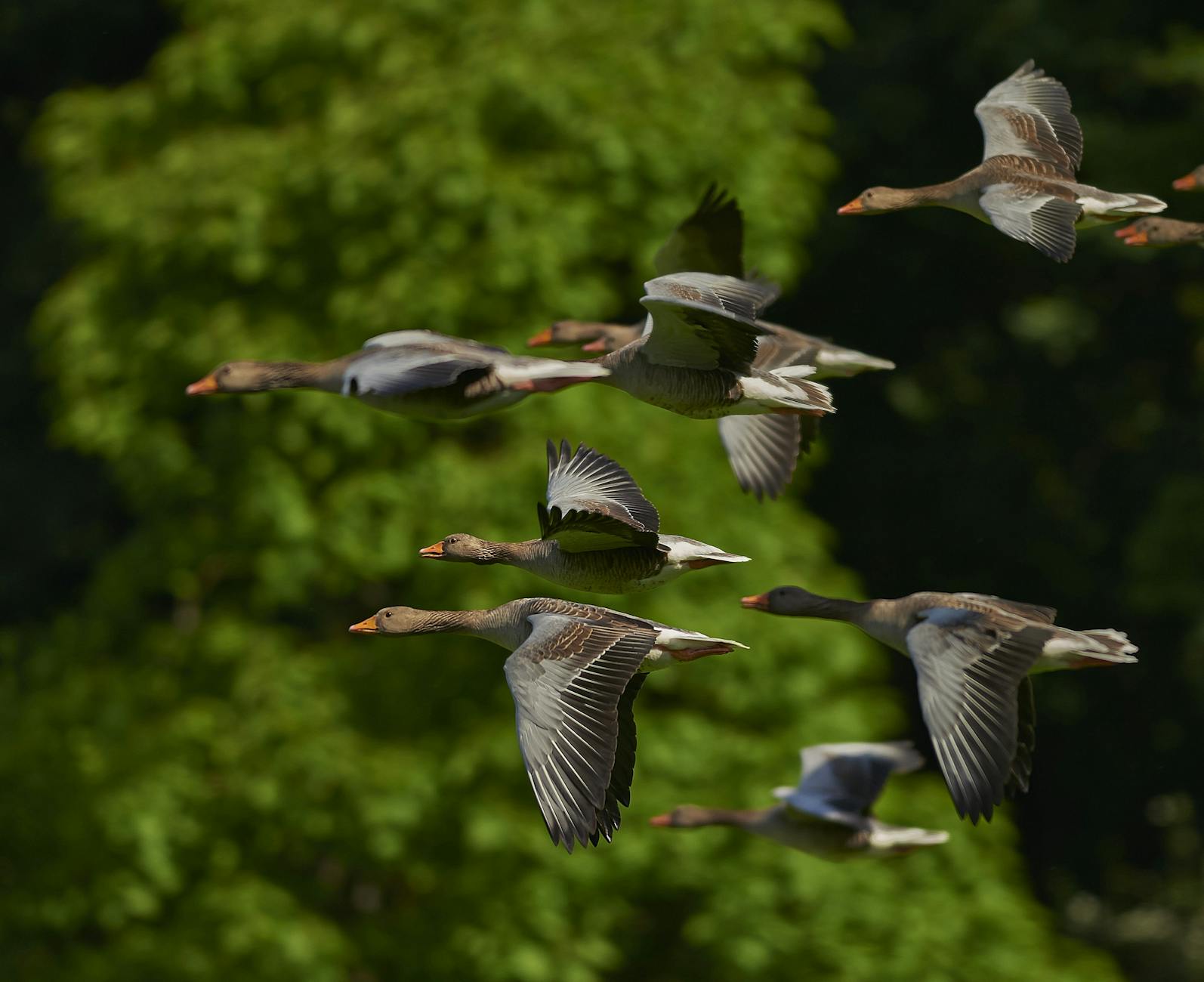

It is a beautiful and rugged image, isn’t it? In Celtic Christianity, the Holy Spirit is often referred to as An Geadh-Glas, or the Wild Goose.
While much of Western tradition uses the dove to represent the Holy Spirit—symbolising peace, purity, and gentleness—the Celtic tradition opted for something a bit more “unfettered.”
Why the Wild Goose?
The reasoning behind this choice is rooted in the characteristics of the bird itself and how those traits reflect a more dynamic understanding of God’s presence.
Unpredictability
Unlike a domestic bird, you cannot control a wild goose. It goes where it pleases. This reflects the biblical idea that “the wind blows where it chooses” (John 3:8). The Celts believed the Holy Spirit wasn’t something to be captured or confined by church walls; it was a wild, moving force.
The “V” Formation and Community
Geese are famous for flying in a V-shaped flock. They take turns leading, and if one bird tires, another moves to the front. This mirrored the Celtic view of “peregrinatio” (pilgrimage)—a journey where individuals are supported by a spiritual community, all following the “lead” of the Spirit.
A Piercing Call
A dove coos softly, but a goose has a loud, raucous honk that demands attention. The Celts saw the Holy Spirit as a “disturber” of the peace—something that calls us out of our comfort zones, alerts us to danger, or stirs our souls to action.
Migration and Direction
Geese have an incredible internal compass. Following the “Wild Goose” meant trusting a divine instinct to lead you to your true home, even if the destination wasn’t yet visible.
The Wild Goose is a reminder that the spiritual life isn’t just about finding stillness; it’s about being swept up into a divine adventure.
Living in Cornwall, we’re familiar with that raw, coastal wind and the sight of migrating birds. It’s easy to see why the early Celtic Christians in places like Iona or St Michael’s Mount found the goose to be a more fitting metaphor for the Spirit than a delicate garden bird.
Leave a Reply