Following on from yesterdays post about the Wild Goose I thought it would be interesting to see why the Celtic world used something called Runes as well as prayers.
In a Celtic Christian context, the main difference is form and intent:
- Prayers (Liturgy & Petition): These are typically conversational. They are directed to God, Christ, or the Saints. Celtic prayers are famous for being “breath prayers”—short, rhythmic sentences used while doing everyday chores like milking a cow or starting a fire.
- Runes (Blessing & Protection): In Celtic tradition, a “rune” (often called a rùn in Gaelic) isn’t necessarily a symbol or an alphabet like the Norse runes. Instead, it refers to a “hallowed mystery” or a secret, poetic blessing. A rune is usually a short, chanted verse intended to invoke protection or to “seal” a person or place with a blessing.
Are Runes Christian?
The answer is a bit of both.
- The Script: Strictly speaking, “Runes” (the angular alphabet) are Germanic/Norse. The Celts had their own ancient script called Ogham, which looks like notches on the edge of a stone.
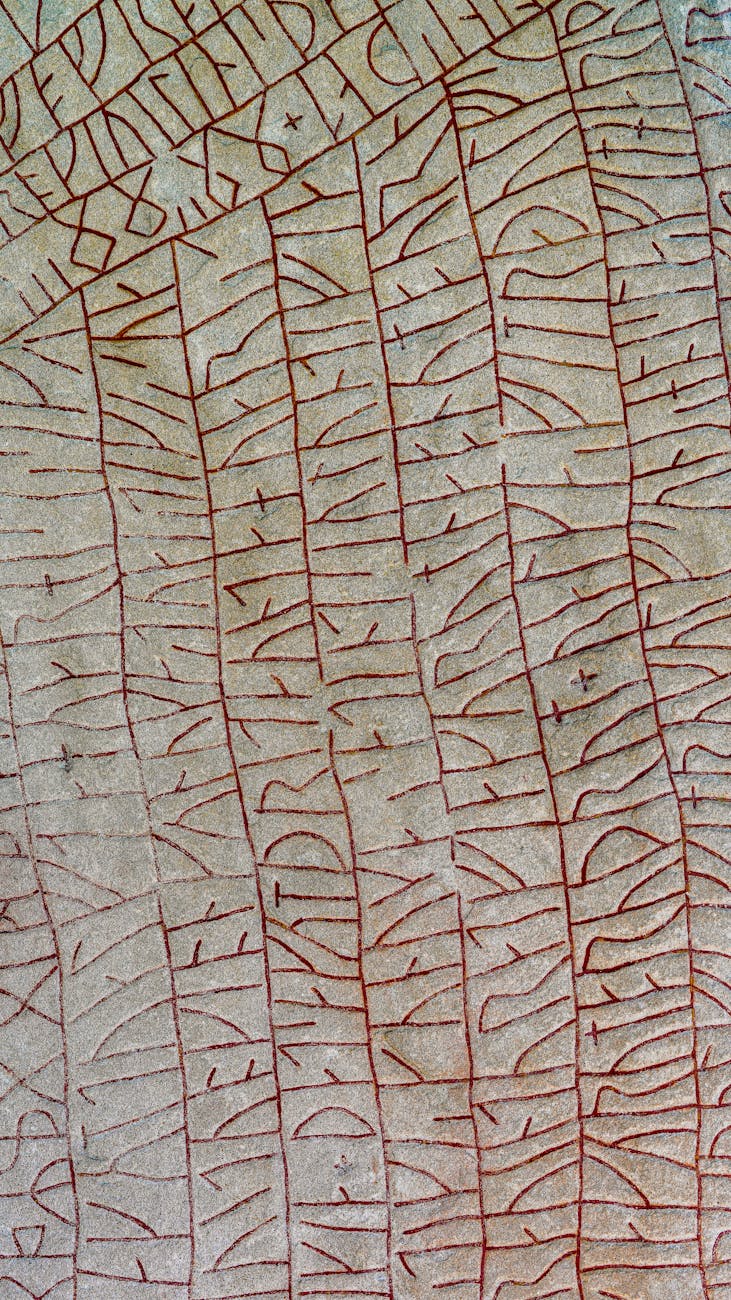
- The Usage: When the Vikings and Celts lived side-by-side (like on the Isle of Man), they often combined their traditions. You can find “Christian Runestones” that have a cross carved on them but are inscribed with Norse runes that say, “May God help his soul.”
- The “Gaelic Rune”: In the Highlands and Islands, a “rune” became a Christianised term for a sacred poem or a “rune of hospitality.” So, while the origins are ancient and “pagan,” they were fully adopted and transformed by early Christians to express their faith.
Prayers of the Wild Goose
1. A Modern Litany (The Iona Tradition)
The Iona Community in Scotland is the modern home of the “Wild Goose” symbol. This prayer is often used to start a journey:
Leader: For your love for us, wild and freeing, which has awakened us to the energy of creation.
Response: We give you thanks.
Leader: O God, we come to celebrate that your Holy Spirit is present deep within us, and at the heart of all life.
Response: Be the Wild Goose that leads us on.
2. A Traditional “Rune of Hospitality”
This is an old Gaelic blessing (translated) that treats the guest as a “messenger of the Spirit.” It acts like a protective rune for the home:
“I saw a stranger yestreen;
I put food in the eating place,
Drink in the drinking place,
Music in the listening place;
And in the sacred name of the Triune,
The lark said in her song:
Often, often, often,
Goes the Christ in the stranger’s guise.”
A “Rune” for You
Since I am a family man, I add here the Rune of the Trinity. It was a common “rune” of protection used by fathers for their households:
The Rune of the Three:
“The protection of the Father be on you,”
“The protection of the Son be on you,”
“The protection of the Spirit be on you,”
“To shield you, to cherish you, to keep you this night and every night.”
Living in Cornwall, we are in a landscape literally carved with these symbols.
The Tristan Stone
The Tristan Stone is perhaps the most famous inscribed monument near us. Located just outside Fowey on the road from Lostwithiel, this 7-foot-tall granite pillar is deeply tied to Arthurian legend.
It bears a Latin inscription that historically read: DRUSTANS HIC IACET CUNOMORI FILIUS. This translates to “Here lies Drustanus, the son of Cunomorus.” Many scholars believe “Drustanus” is an early version of the name Tristan, suggesting it marks the grave of the legendary knight from the tragic tale of Tristan and Iseult. On the reverse side, there is a carved Tau cross (a “T” shape), which is an ancient Christian symbol.
St Bartholomew’s Church
In the heart of Lostwithiel, St Bartholomew’s Church houses several important stone monuments that reflect the town’s history from the medieval period through the 16th century. The 14th-Century Font, while not a “standing stone,” this octagonal limestone font is an outstanding piece of carved stonework featuring a “Green Bishop” with leaves coming from his mouth, a hunting scene with a hound chasing a rabbit, and a grotesque head. Inside the church, you can find a large granite ledger stone dating to 1584. It features an inscription around the border and a central coat of arms belonging to a prominent local family.
Castle Dore
Castle Dore is an Iron Age hillfort where the Tristan Stone was originally located before being moved for preservation. This site is believed to have been the palace of King Mark of Cornwall in the 6th century. While the inscribed stone is no longer at the earthworks, the site itself is a “stone and earth” monument to the kings mentioned in the inscriptions. The name “Cunomorus” found on the Tristan Stone is often identified with King Mark, linking the physical landscape of the fort to the text on the stone.
Lanlivery St Brevita
The churchyard of Lanlivery St Brevita is known for its collection of ancient stone crosses and fragments. The churchyard contains ancient granite crosses that served as “wayside” markers or memorials. These stones often feature intricate interlace patterns rather than long text inscriptions. These were frequently used as route markings across the moors or as boundary stones between parishes.


Leave a Reply