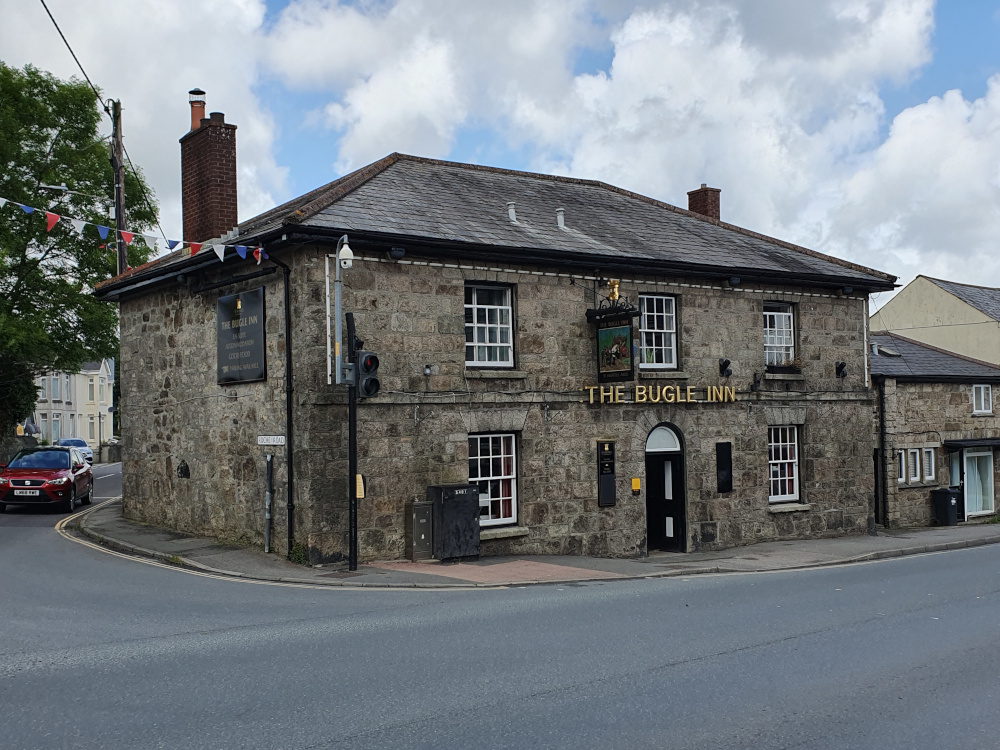
Unlike most Cornish settlements whose names derive from the ancient Cornish language (like Tre-, Pol-, or Pen-), Bugle is named after a pub.
Before the 19th century, the area was mostly open moorland and farm fields. The village literally grew up around The Bugle Inn (built around 1837), which served as a crucial stopping post for stagecoaches running between Bodmin and St Austell.
You might think a name like Bugle comes from an ancient Cornish word for “windy hill” or “misty valley”. Nope. The village is actually named after a pub.
In the early 1800s, The Bugle Inn was built to serve passing stagecoaches. The drivers would blast a bugle horn to alert the innkeeper to pull a fresh pint (or get the horses ready), and the settlement that grew around the pub took the name.
Ironically, while no brass instruments are required to speak the name, brass music is in the village’s blood. Every summer, Bugle hosts the famous West of England Bandsmen’s Festival, where top brass bands battle it out for glory.
Clay Country Legacy
Bugle sits in the heart of Cornwall’s “Clay Country”. For generations, the landscape here wasn’t defined by sandy beaches, but by giant white pyramids of kaolin clay waste that looked like something off the moon. It’s rugged, hardworking, and pure Cornish industrial history.
Bugle: No, it’s not pronounced “Bug-Lee”
How to say it: “BYOO-gull”. Exactly like the military horn.
The Mispronunciation: Every now and then, a visitor will attempt to give it some European elegance and ask for directions to “Bug-Lee”. Save your French accent for elsewhere; it’s plain old Bugle.

Leave a Reply