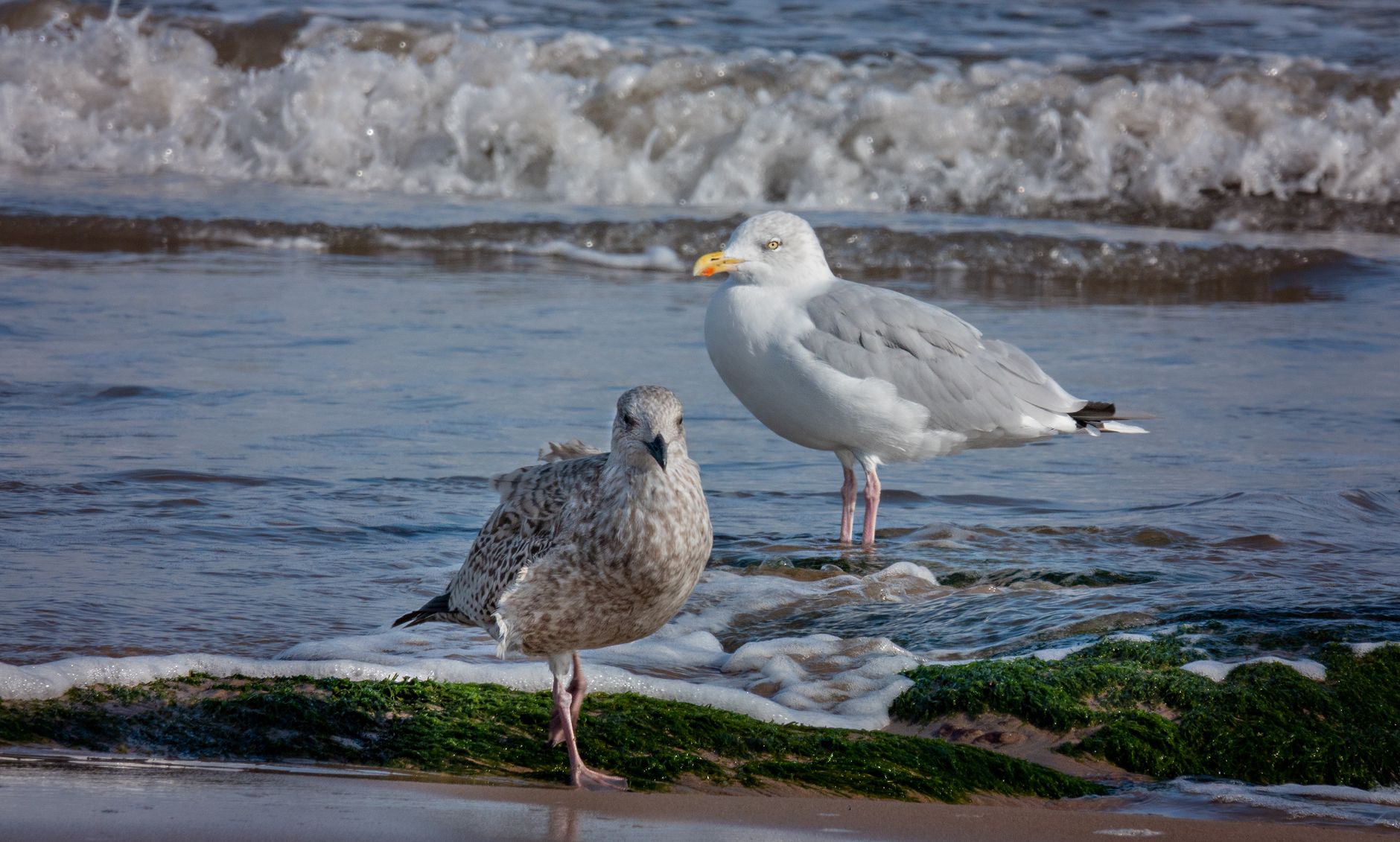

If you have ever had your ice cream snatched on a coastal holiday, you probably blamed a “seagull”. But ornithologically speaking, you were robbed by a ghost.
“Seagull” is a purely colloquial nickname. In biological classification, it doesn’t exist. There is no single species or scientific family with that name. Instead, the world is home to over 50 distinct species of gulls (belonging to the family Laridae). Calling them all seagulls is a bit like calling every single canine—from a chihuahua to a wolf—a “streetdog”.
Furthermore, the “sea” part of the name is highly misleading. Many gull species spend their entire lives inland, nesting on lakes, feeding on agricultural fields, or scavenging at urban waste centres miles from the nearest saltwater.
To help clear the family name, here is a field guide to the top seven gulls you are most likely to see, along with the fascinating facts that prove they are far more than just loud beachcombers.
The Big Seven: A Guide to Real UK Gulls
1. Herring Gull (Larus argentatus)
The definitive “seagull” of the public imagination. They are large, loud, and incredibly confident. You can spot them by their light grey backs, pink legs, and a fierce-looking yellow bill with a distinct red spot on the lower mandible. Chicks instinctively peck at the red dot, which triggers the parent to regurgitate food for them.

2. Black-Headed Gull (Chroicocephalus ridibundus)
A smaller, much more delicate gull that is incredibly common inland on park lakes and rivers. Despite the name, their heads are actually a deep chocolate brown during the summer breeding season, fading to a tiny dark smudge behind the eye in the winter.
They are highly opportunistic dancers. To catch a meal, they stand on wet grass and rapidly paddle their webbed feet up and down—a clever trick that mimics the vibration of rain and coaxes earthworms to the surface.

3. Lesser Black-Backed Gull (Larus fuscus)
Roughly the same size as a Herring Gull, but easily distinguished by its dark, slate-grey to near-black back and bright yellow legs.
Unlike Herring Gulls, which mostly stay put in winter, many UK Lesser Black-backs are serious travellers, migrating south to spend their winters basking on the coastlines of Spain, Portugal, and North Africa.

4. Great Black-Backed Gull (Larus marinus)
The undisputed king of the Atlantic gulls. This is the largest gull species in the world, with a massive heavy bill and a brooding, pitch-black back. They look less like a beach bird and more like an apex predator—which they are.
They are formidable hunters. Beyond scavenging, they regularly hunt other birds, including puffins, shearwaters, and wild ducks, sometimes capturing them mid-air or swallowing smaller prey whole.

5. Common Gull (Larus canus)
Don’t let the name fool you; they aren’t actually the most common gull in the UK. They look like a miniaturised, gentler version of the Herring Gull but can be identified by their dark, kind-looking eyes, greenish-yellow legs, and lack of a red spot on the bill.
They are incredibly long-lived birds if they survive past fledgling status. The oldest recorded wild Common Gull reached an impressive 33 years of age.

6. Kittiwake (Rissa tridactyla)
The true ocean wanderer of the group. Unlike the others, Kittiwakes are strictly coastal and marine, spending the harsh winter months far out at sea on the open Atlantic. They have a clean, elegant look with solid black wingtips that look as if they’ve been dipped in ink.
They get their name from their distinctive, rhythmic call which sounds exactly like they are shouting “kitti-wa-a-ake!” across the sea cliffs.

7. Mediterranean Gull (Ichthyaetus melanocephalus)
Once a rare visitor to the UK, these strikingly handsome birds are becoming far more common. Unlike the Black-headed Gull, the Mediterranean Gull has a jet-black hood in summer that extends right down its neck, paired with a bright red bill and clean, white wings with no black tips.
They possess a remarkably distinct voice that sounds less like a typical harsh gull squawk and more like a cat-like, nasal “mee-ooow”.

The next time someone complains about the “seagulls” at the coast, you can gently let them know that they are looking at a complex, highly intelligent family of birds. Whether it’s the foot-tapping worm-dance of the Black-headed Gull or the sheer coastal dominance of the Great Black-backed, these birds are success stories thriving right on our doorsteps.

Leave a Reply