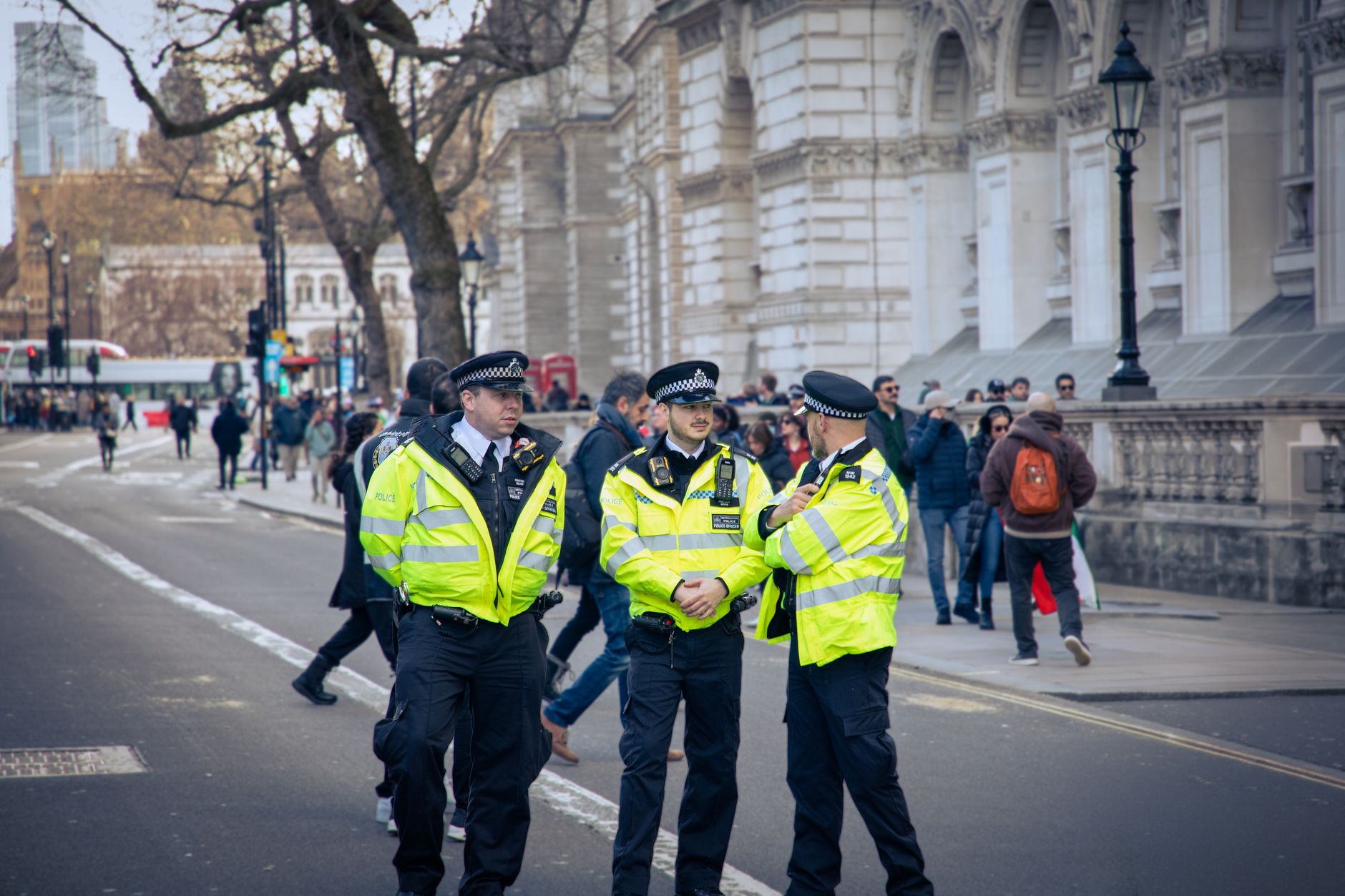

The term “copper” has a brilliant bit of history behind it, and it actually has nothing to do with the metal, despite a very popular urban myth!
You might hear people claim that early police officers wore uniforms with shiny copper buttons or carried copper badges. While some early American forces did use copper accents on their uniforms, the real origin of the nickname is entirely linguistic and comes from standard British slang.
The Slang Verb: “To Cop”
In 18th and 19th-century Britain, the slang verb “to cop” meant to catch, snatch, or capture something. It likely developed from the Old French word caper, which meant “to seize”.
If a thief snatched a wallet, they “copped” it. But more importantly, when the police caught a criminal, they “copped” the lawbreaker.
From “Cop” to “Copper”
By the early 1840s, people started adding “-er” to the end of the verb to describe the person doing the catching.
To Cop (to catch) + -er = Copper (one who catches).
So, quite literally, a “copper” was just someone whose job it was to catch criminals.
Other Classic British Police Nicknames
While “copper” is global now, the British police forces spawned a few other famous names based on the people who created them:
- Bobby: This comes from Sir Robert Peel, the Home Secretary who established the Metropolitan Police Force in 1829. “Bobby” is just a friendly nickname based on “Robert.”
- Peeler: An older, slightly more old-fashioned version of the nickname above, also directly honouring Sir Robert Peel.
So, next time you hear someone say it’s because of their buttons, you can gently let them know it’s actually all about the “catch”!

Leave a Reply