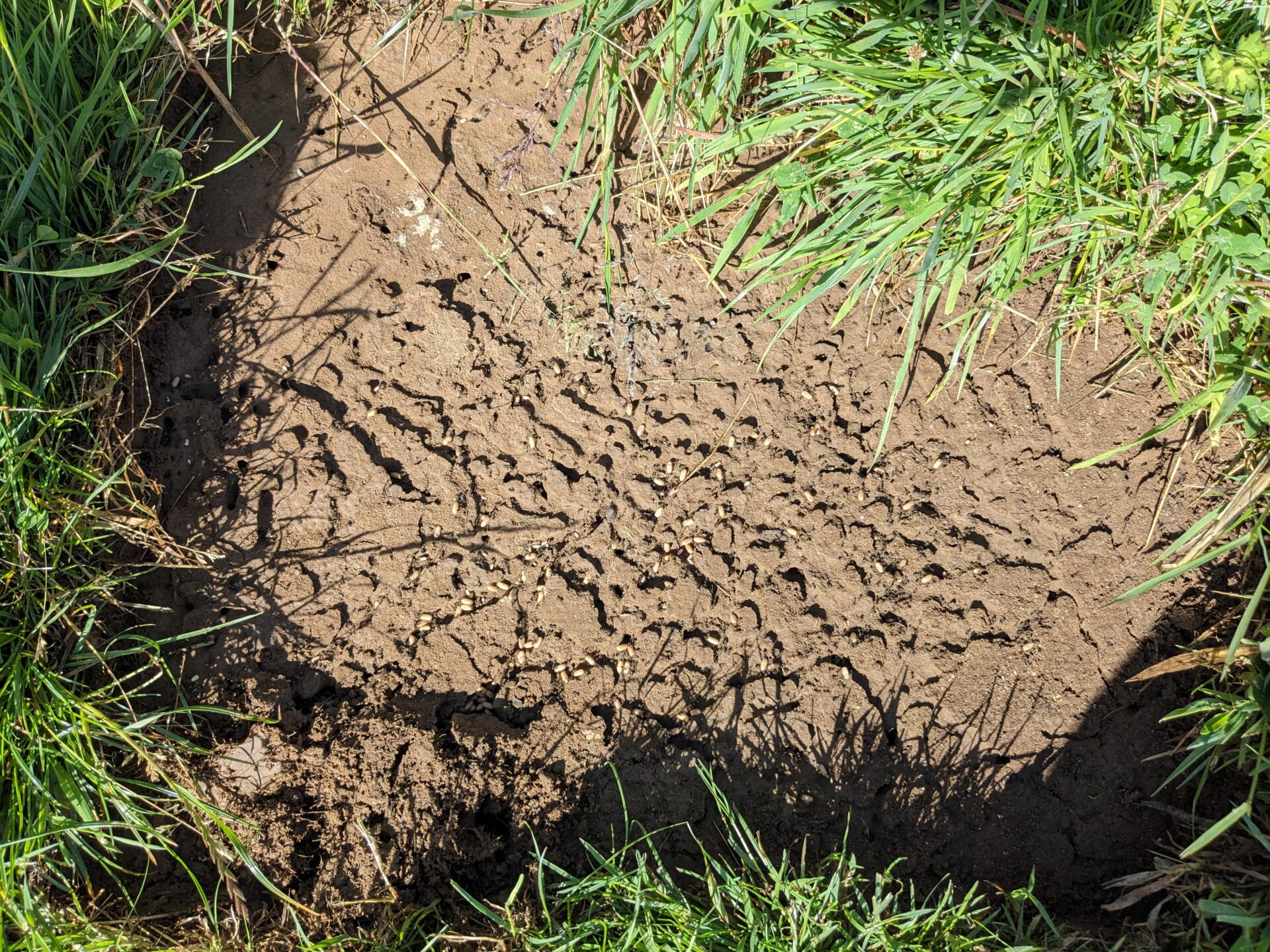
When the heavy flagstone was raised, it revealed a thriving subterranean world. Suddenly exposed to the open air and the threat of weather, the ant colony instantly sprang into action. At first glance, it looked like a frantic, random rush—a swirling maze of tiny bodies moving in every direction at high speed. Yet, within this apparent panic, there was absolute purpose.
Working with incredible urgency, the ants formed spontaneous teams, scurrying over the rugged terrain of loosened earth. They delicately gripped the pale, oblong eggs in their mandibles, navigating the crumbling craters and ridges of the nest. There was a collective drive to secure the next generation, with each ant playing its part in the scramble. As the young people watched on, the frantic energy slowly gave way to clear progress until, finally, a lone ant successfully guided the very last egg safely down into the darkness of the lower tunnels. It was a beautiful, mesmerizing moment of nature’s teamwork—allowing us to sit back quietly and appreciate a massive job well done.
Bonus Content: Do Ants Add to Your Garden or Take Away?
It is easy to view ants as pests when they pop up under patio slabs or near the house, but in the wider garden ecosystem, they are overwhelmingly helpers rather than hindrances. Here is how they impact your garden:
How Ants Add to Your Garden (The Benefits)
- Natural Aerators: As you saw under the flagstone, ants dig an extensive network of tunnels. This constant excavation churns the soil, aerating it and allowing oxygen, water, and vital nutrients to reach the roots of your plants much more effectively.
- Pest Control: Ants are excellent predators. They hunt and eat many common garden pests that ruin crops and flowers, including silverfish, caterpillars, and flea beetle larvae.
- Seed Dispersal: Many ants harvest seeds and carry them back to their nests. The seeds they drop along the way, or leave uneaten underground, often germinate, helping to plant new wildflowers and plants naturally.
- Enriching the Soil: As ants bring organic matter (like dead insects and leaves) into their tunnels, it breaks down and acts as a brilliant, localized fertilizer.
How They Can “Take Away” (The Downsides)
- Protecting Aphids: Ants love “honeydew,” a sweet fluid secreted by pests like aphids and sap-feeders. To protect their food source, ants will actively guard aphids from predators like ladybirds, which can lead to a higher aphid population on your prized plants.
- Disturbing Roots: While digging is usually good, a massive nest right underneath a small, delicate plant can occasionally disturb its roots or cause the soil to dry out too quickly.
The Verdict: Overall, ants are the ultimate miniature caretakers. Unless they are actively invading your home or farming aphids on a favourite plant, having them on the farm or in the garden is a massive plus for soil health and biodiversity!


Leave a Reply