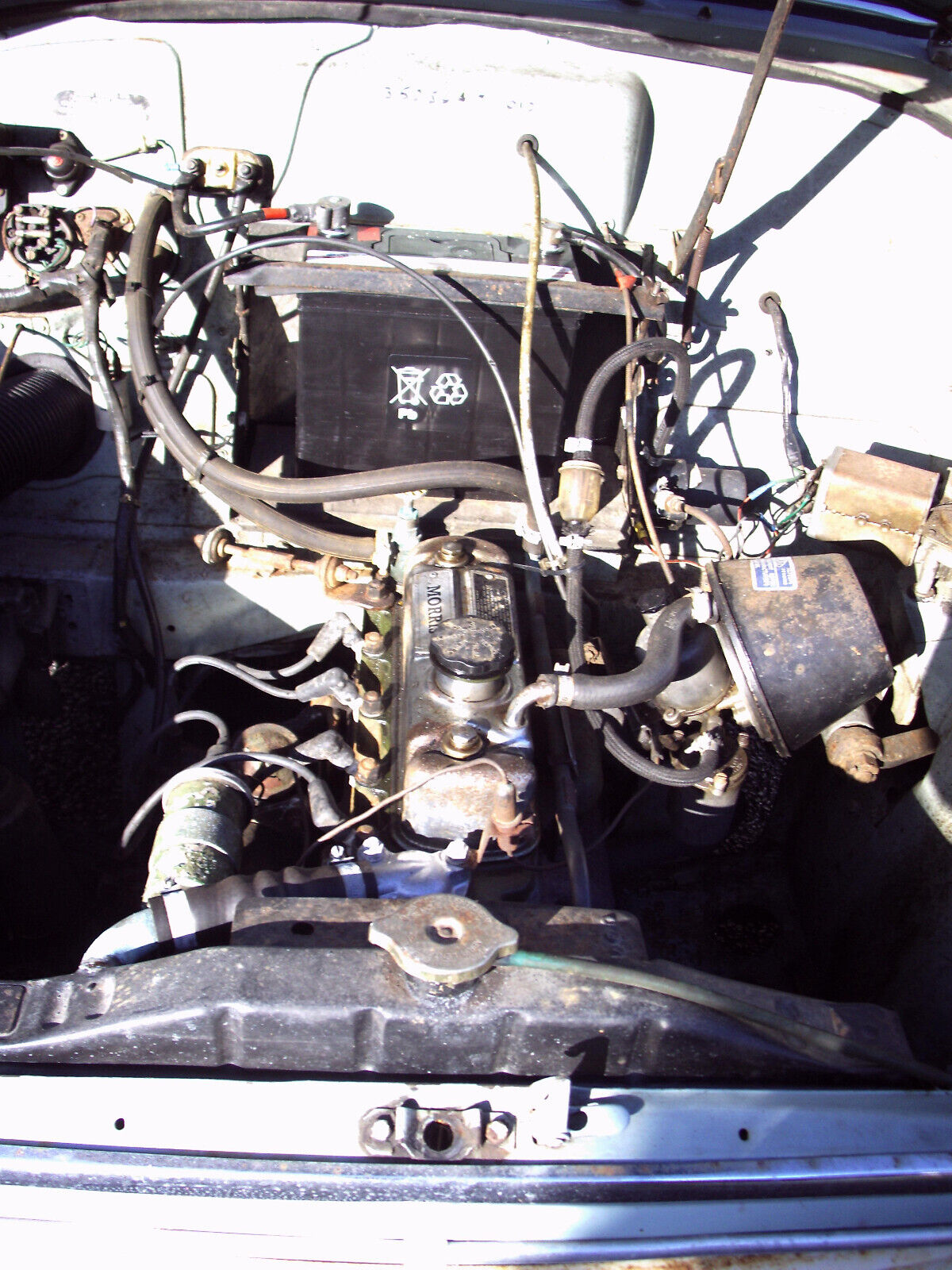

The evolution of the classic car industry owes much of its success to two distinct engineering philosophies: the air-cooled flat-four of the Volkswagen and the water-cooled A-series inline-four of the Morris Minor. While both powered the “people’s cars” of their respective nations, their mechanical DNA could not be more different.
The Origins: Porsche vs. The Nuffield Empire
The histories of these engines are inextricably linked to the legendary figures who championed them. The Volkswagen air-cooled engine was the brainchild of Ferdinand Porsche. Tasked with creating a “Volkswagen” (People’s Car) that was simple, robust, and easy to maintain, Porsche looked toward a rear-mounted, air-cooled boxer layout. This design choice was practical; it eliminated the need for a radiator, water pump, and coolant, which were prone to freezing in harsh winters or leaking under pressure.
This engine became the backbone of the VW Beetle and the Type 2 Transporter. Interestingly, the link to Porsche remained throughout its life; the early Porsche 356 sports cars utilised a tuned version of this same basic architecture, proving that the design was as capable of performance as it was of reliability.
On the other side of the English Channel, the Morris Minor was born from a very different corporate culture. Its designer, Alec Issigonis—the man who would later create the Mini—was a visionary who often clashed with the traditionalist management of Morris Motors. Lord Nuffield, who ran the company, famously disliked Issigonis’s “Mosquito” (the Minor’s prototype name), reportedly calling it “a poached egg.” Despite this friction, the Minor entered production in 1948, eventually adopting the legendary A-series engine in 1952 following the merger that formed BMC.
The A-Series: A Masterpiece of Endurance
The A-series engine is often cited as one of the most successful power-plants in British history. A common legend among classic car enthusiasts is that during its initial development, the engine performed so perfectly on the test bed that engineers were stunned. It was run at full throttle for hundreds of hours without failure, and the story goes that they eventually had to simply switch it off because it refused to break.
Unlike the VW engine, the A-series is a conventional water-cooled, cast-iron unit. It is celebrated for its “tunability” and its smooth power delivery. While the VW engine relies on a large fan to blow air over finned cylinders, the A-series uses a radiator and water jacket, which generally allows for better cabin heating—a luxury Minor owners often appreciate over the sometimes temperamental heat exchangers of a vintage VW.
Key Mechanical Differences
Cooling Systems
The VW engine is air-cooled. This makes the engine lighter and mechanically simpler, as there are no hoses to perish or radiators to clog. However, it requires a precise “tinware” setup to direct airflow correctly. The A-series is water-cooled, providing more consistent operating temperatures but requiring a cooling system that needs regular maintenance.
Layout and Sound
The VW uses a “Boxer” layout, where the pistons move horizontally in pairs. This gives the VW van its distinctive “thrum” or “chatter.” The Morris Minor’s A-series is an upright, inline-four engine, known for a more rhythmic, “sewing machine” purr and a characteristic exhaust note that is instantly recognisable.
Maintenance Philosophy
The VW engine is designed to be easily removed; a practised mechanic can have a Beetle or Transporter engine out in under twenty minutes. It is a modular design. The A-series is more traditional, tucked into the engine bay of the Minor with excellent accessibility for the home mechanic to adjust the valves or points.
Two Icons of the Road
Whether it is the air-cooled engine of a VW Transporter or the A-series powering Rosie the Morris Minor, both engines represent a golden age of mechanical honesty. The VW engine brings a touch of Porsche-designed efficiency and ruggedness, perfect for a camper van meant for coastal adventures. Meanwhile, the A-series offers the refined, indestructible charm that made the Morris Minor a staple of British life for decades.
Both engines did more than just move wheels; they powered memories. Whether you prefer the air-cooled whistle of a van or the sturdy hum of a Minor, both remain a testament to the days when you could fix your car with a simple set of spanners and a bit of patience.
I run a Morris Minor and my brother-in-law has a Vintage VW Camper Van which is available for hire.


Leave a Reply