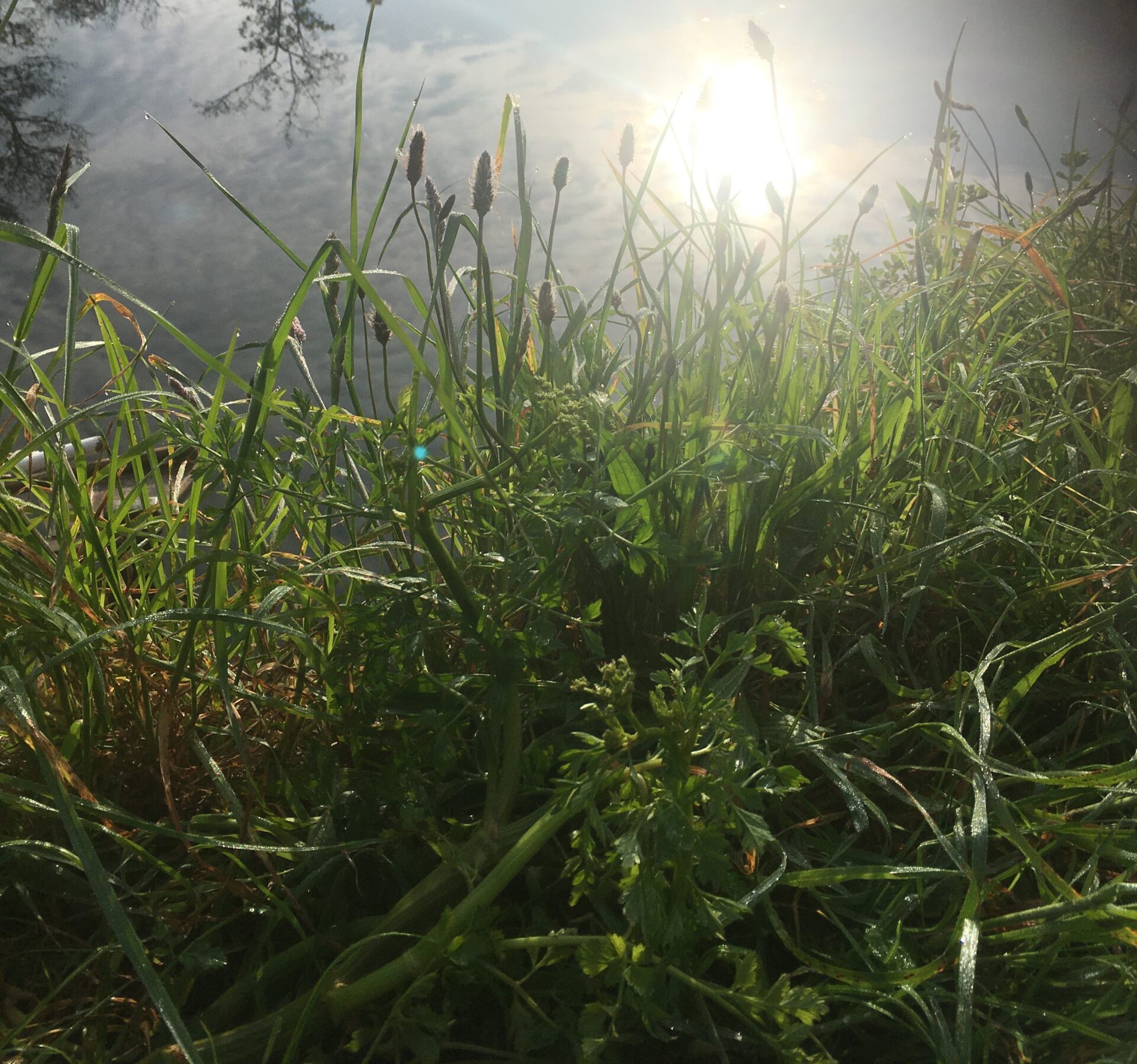

Ever stepped onto the grass first thing in the morning and completely soaked your trainers, even though your weather app promised zero rain?
Or spotted a spider’s web that looks like it’s been strung with tiny glass beads?
It didn’t rain while you were asleep. Dew doesn’t drop down from the clouds at all. It’s born right on the ground, and it definitely feels like it has a mind of its own—showing up in full force one morning, and disappearing without a trace the next.
Here is what is actually going on.
The Magic Trick: Condensation
Think about taking an ice-cold can of drink out of the fridge on a warm afternoon. Within minutes, the outside of the can is dripping wet. The can isn’t leaking—the invisible water vapour floating around the room hits that icy metal, chills down instantly, and turns back into liquid water.
Dew is the exact same trick, just played outdoors on a massive scale.
During the day, the air acts like a giant sponge, soaking up invisible moisture. But when night falls, things like grass blades, leaves, wooden fences, and car windscreens dump their heat straight out into the sky. They cool down fast—becoming just like that cold drink can. When the air brushes against them, it hits the “dew point” (the exact temperature where the air says, “Nope, I can’t hold any more water”), and drops of liquid water cling to the surface.
Why Dew “Picks and Chooses” Its Days
Dew is remarkably picky. For it to show up, the night needs to meet three strict conditions:
- Clear skies (No cloud blanket): Clouds act like a duvet, trapping the day’s warmth close to the ground. On a clear night, the heat escapes straight out into space, letting surfaces cool down fast.
- Just a whisper of wind: Strong wind stirs the air up like a giant spoon, keeping everything mixed and warm. Dead still air makes the water form into fog instead. Dew wants a lazy, gentle drift—just enough to push fresh moisture against the cold grass.
- Damp air: If the air is already dry, the ground can’t cool down enough to squeeze any water out.
The Best Time to Catch It
Autumn is prime time. The ground is still damp and warm from the season, but the nights are long, dark, and crisp—giving the grass plenty of time to chill right down before sunrise. (And if the thermometer drops past 0°C, that dew skips being liquid altogether and turns into sparkling frost.)
Next time you’re heading out early and the lawn looks like a glitter bomb went off, you’re not looking at leftover rain. You’re looking at the air wringing itself out against the cold earth.


Leave a Reply