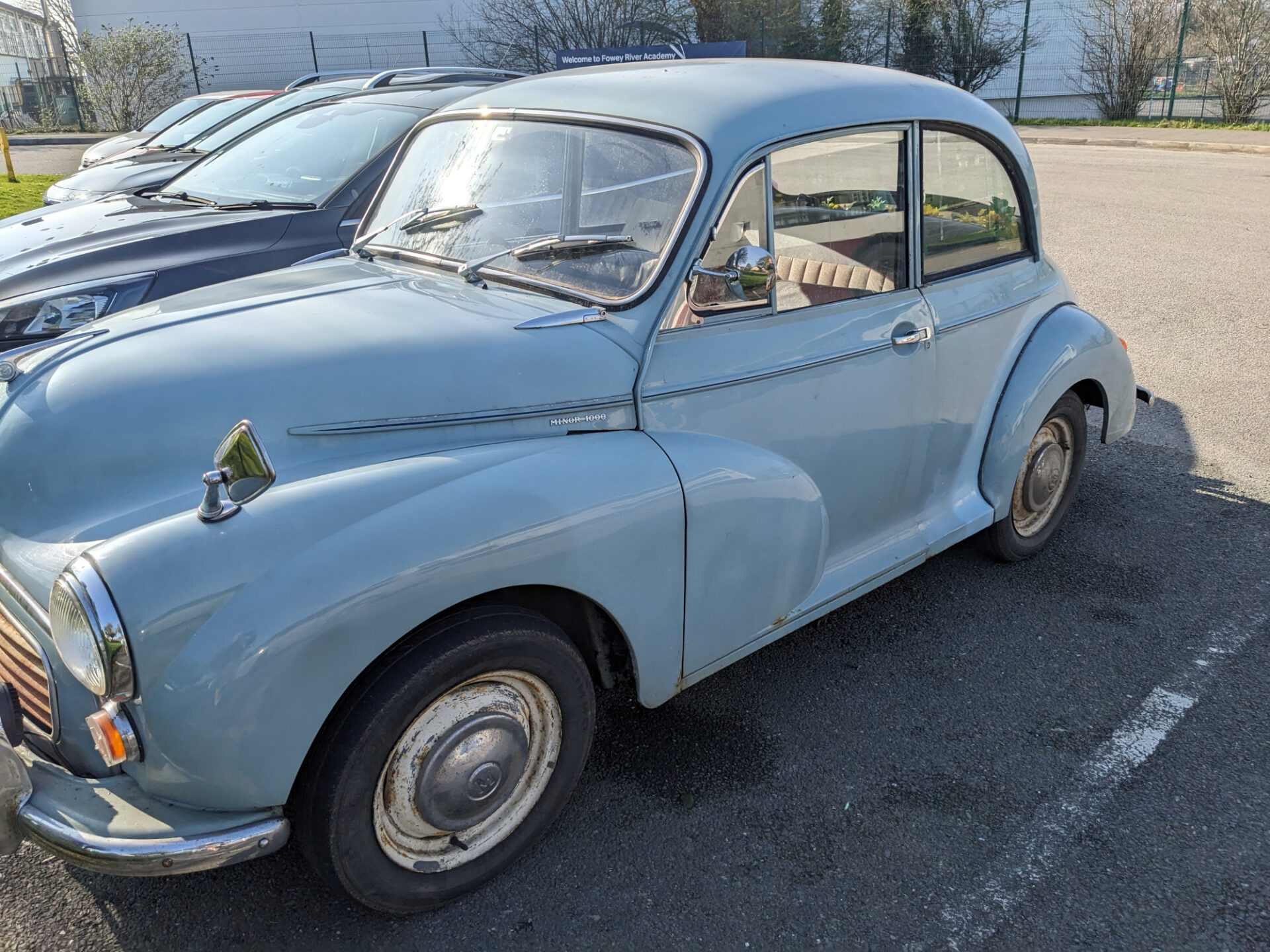

Talking Tyres
There is a certain therapeutic rhythm to driving a Morris Minor. It’s not about the 0–60 mph time (which is usually measured with a calendar rather than a stopwatch); it’s about the soul. My Rosie is a gem, but let’s be honest: looking at her tyres next to a modern SUV is like comparing a pair of size 4 shoes to a set of oversized farmer’s wellies.
If you’ve ever wondered why Rosie sports those slender 14-inch wheels while modern cars look like they’re rolling on steamrollers, let’s talk tyres, safety, and why “thicker” isn’t always “quicker.”
What on Earth is a “135”?
When we talk about a 135 tyre, we are looking at the nominal section width. In plain English: if you looked at the tyre from the front, it is 135 millimetres wide from sidewall to sidewall.
Modern cars often start at 195 or 205 and go up from there. Why the growth spurt?
Grip and Weight
Modern cars weigh about as much as a small moon. To stop 1.5 tonnes of steel and plastic from sliding into a hedge, you need a larger “contact patch” (the bit of rubber actually touching the tarmac).
Horsepower
Rosie isn’t exactly tearing up the asphalt with raw aggression, but a modern hatchback has enough torque to shred a thin tyre. Wider rubber spreads that force out.
The Snow Secret: Why Rosie Wins in the Slush
You’ve probably noticed that while the modern “Super-Grip-Extreme” 4×4 is sliding gracefully toward a ditch in the snow, Rosie just hums along. You aren’t imagining it! Bridgwater in 1992 saw my first Morris Minor called Rachel leave the estate I was living on with a carefree abandon despite the snow!
It comes down to Pressure vs. Surface Area
A wide tyre acts like a snowshoe; it stays on top of the snow and slides. A thin 135 tyre acts like a pizza cutter. (And pizza is my favourite food). Because the weight of the car is concentrated on a much smaller area, it exerts higher pressure, cutting through the slush to find the hard grip underneath. It’s the one time being “vertically challenged” in the width department is a massive advantage.
Cross-Ply vs. Radial: The Great Leap Forward
Originally, Minors came with cross-ply tyres. Driving on those was… an adventure. The sidewalls were stiff, and they had a tendency to “track” every groove in the road, making the steering feel like you were wrestling a grumpy badger.
Upgrading Rosie to radials is the best gift you can give her. Radials have flexible sidewalls and a rigid tread, meaning you get more grip. The tread stays flatter on the road. They live longer. They don’t get as hot, so they last longer. And you get better fuel economy. They roll easier, which is good news for the petrol tank!
Keeping the Family Safe
At the end of the day, whether you’re cruising through the Cornish lanes or navigating a rainy motorway, those four contact patches—each roughly the size of a postcard—are the only things keeping your family on the road.
I drive Rosie because I love the history, but I keep her tyres tip-top because of Anna, Abigail, and Mia. When you’re carrying your world in the backseat, “good enough” rubber isn’t good enough.
The Golden Rules for Rosie (and any car):
Check the Pressure: Under-inflated tyres make the handling “squidgy” and dangerous.
Watch the Tread: Once you get down to 3mm, your stopping distance in the rain increases dramatically. Don’t wait for the legal limit of 1.6mm.
Check for Cracks: Classic cars often do low miles, meaning the tread looks fine but the rubber is perishing from age. If they look crusty, bin them!
Rosie might be an old girl, but with the right tyres, she’s as reliable as they come!
Leave a Reply