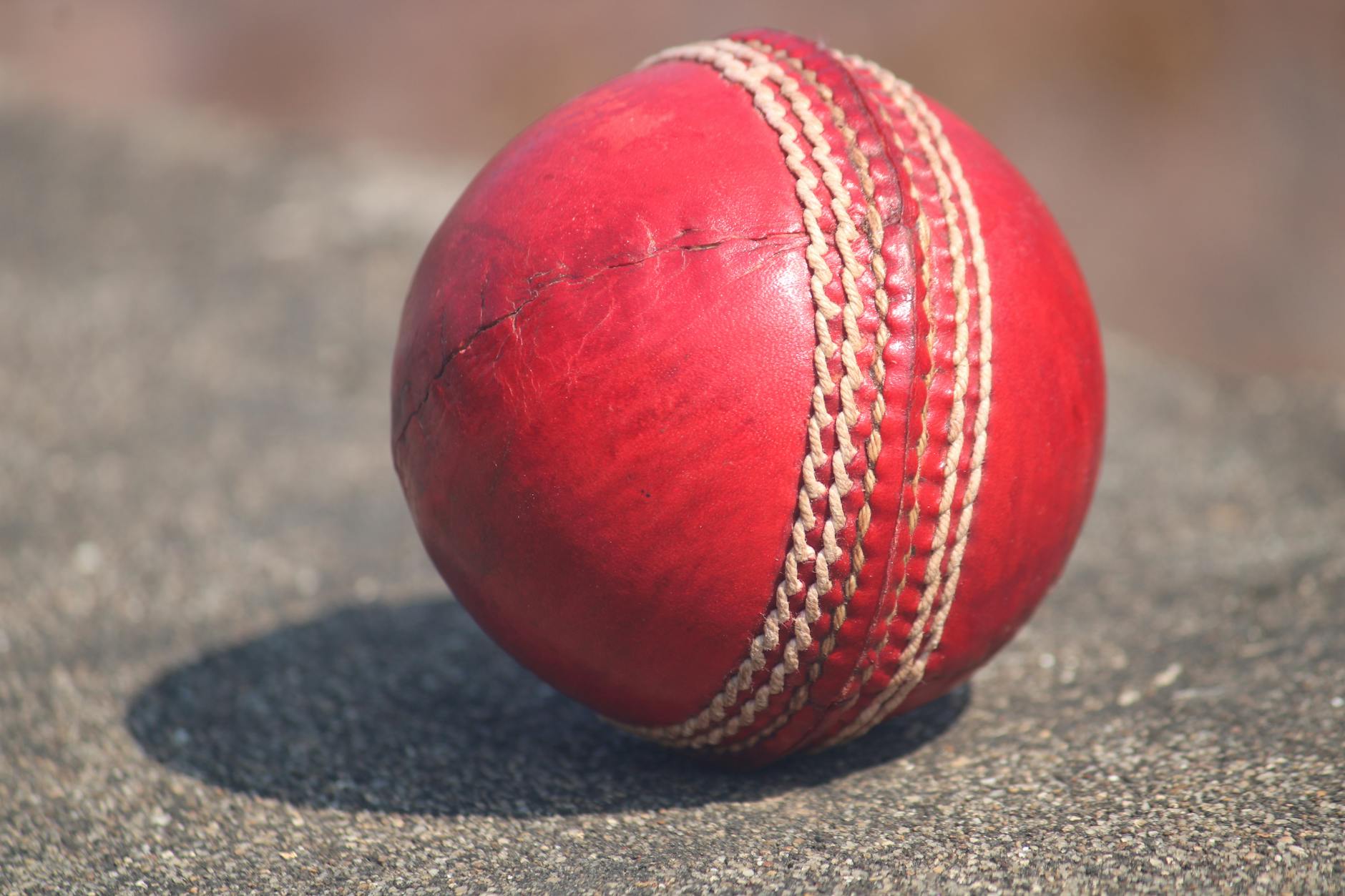

Ever wondered why there’s such a fuss when a six disappears over the grandstand? In cricket, the ball isn’t just equipment; it’s a developing character. As it gets older, the way it moves through the air changes completely.
The Science of the Swing
To understand why a lost ball is a headache, you have to understand Aerodynamics.
Conventional Swing
When a ball is relatively new, bowlers polish one side and let the other get rough. As the ball flies, air moves faster over the smooth side and creates “turbulence” on the rough side. This pressure difference pushes the ball toward the rough side, making it “swing” in mid-air.
Reverse Swing
This is the “dark art.” Once a ball is very old (usually over 40–50 overs), it becomes heavy and pitted. If a bowler can keep one side incredibly dry and smooth while the other is extremely rough, the airflow flips. The ball begins to “reverse,” moving in the opposite direction of what the batter expects. It’s incredibly difficult to play because it happens much later in the ball’s flight.
The High Stakes of a Lost Ball
If a ball is lost at the 40-over mark, the bowling side has worked for hours to get that ball into a specific condition—perhaps they’ve just reached the point where it’s starting to “reverse.”
If the umpire handed them a brand-new ball, it would be a total restart. The new ball would be harder, bounce higher, and swing conventionally, which might not suit the bowlers at that stage.
Conversely, it could be a massive disadvantage to the batters who have finally got used to the “old” ball’s pace. This is why umpires must find a replacement that is identically worn.
Where do “Old” Balls come from?
You might wonder where the umpires get a “34-over-old ball” on demand. They don’t have a time machine; they have a spare ball box. These balls are “created” in a few ways:
Match Graduates
Most spare balls are survivors from previous matches. If a game ends or a ball is swapped out for being out of shape, it is cleaned, graded by its “overs used,” and put into the spare kit.
The “Nets” pipeline
Professional teams and academies go through hundreds of balls during practice. Balls that have been bowled for a specific number of overs in the nets are often donated or sold to officials to be used as match-grade spares.
The Break-in
In some lower-tier leagues, if they are short on spares, a “new-old” ball can be conditioned by being rubbed on concrete or sanded slightly to mimic wear, though in professional cricket, they strictly prefer balls that have been naturally aged through play.

Leave a Reply