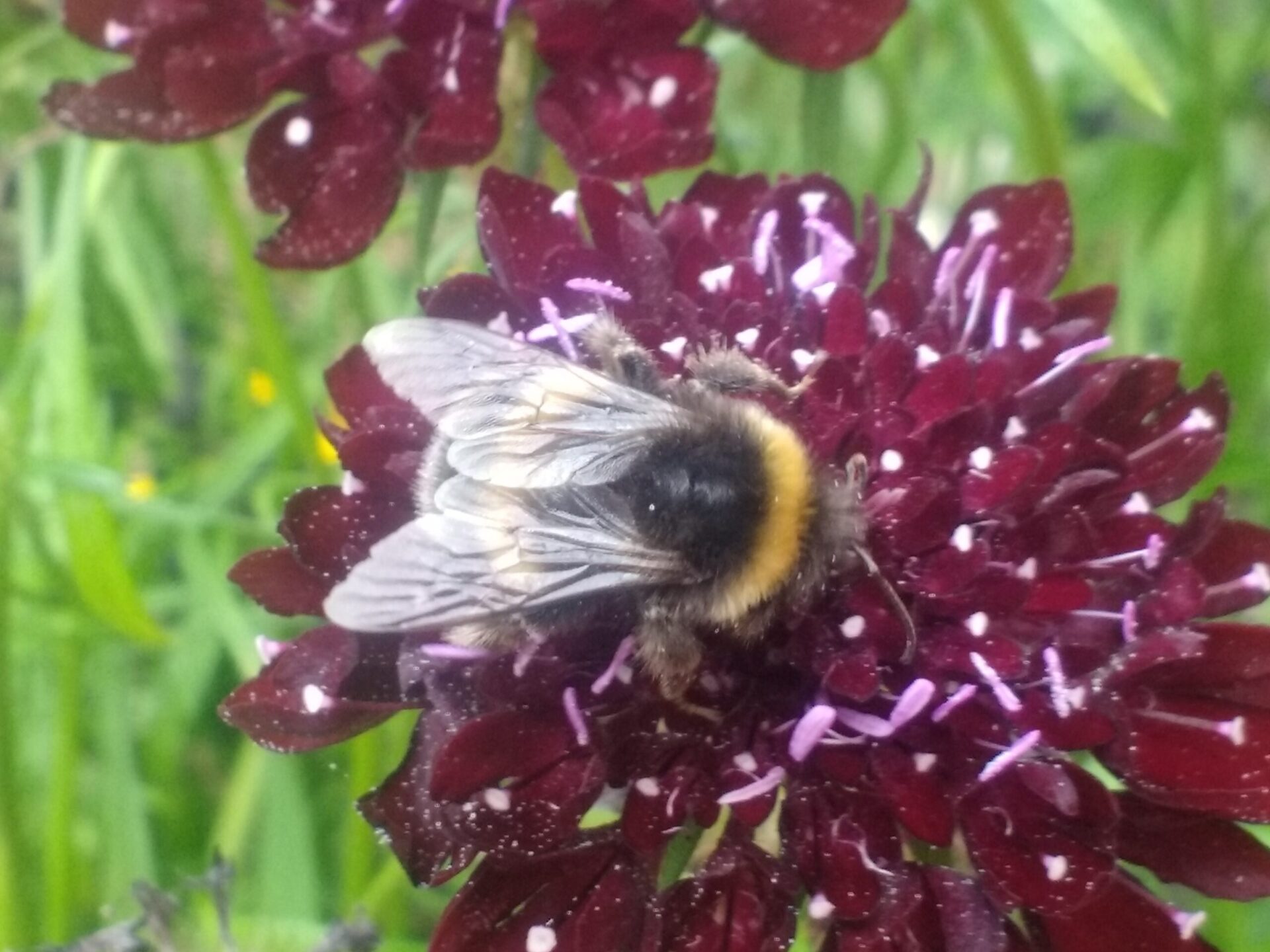

If you’ve ever enjoyed a summer picnic, you’ve definitely met both. But while one is celebrated as an environmental hero, the other is often treated like a total villain.
Here are the real differences between bees and wasps—and I want to bust a few myths along the way.
Appearance
Bees: They are chunky, round, and covered in velvety hair designed to trap pollen.
Wasps: Built like sports cars. They are sleek, shiny, hairless, and feature that classic, impossibly tiny “wasp waist.”
What’s on the Menu?
Bees are Vegan: They only care about flower power—drinking sweet nectar and gathering pollen.
Wasps are Meat Eaters: Adult wasps are actually the unpaid security guards of your garden. They hunt down pests like greenflies and caterpillars to feed to their baby larvae. Without wasps, our crops and gardens would be completely overrun!
What is the truth about the sting
The Myth: “Bees sting once and die; wasps can sting forever.”
The Reality: Only honeybees die after a sting because their stinger is barbed. Bumblebees and wasps have smooth stingers, meaning they can use them multiple times. The good news? Neither actually wants to sting you unless you step on them or attack their home.
Who Makes the Honey?
Honeybees: They are the only ones who build massive permanent hives and stockpile honey to eat during the cold British winters.
Solitary Bees: Did you know most bees are loners? Over 240 species in the UK don’t live in hives at all—they live by themselves in tiny holes in wood or soil.
Wasps: They build beautiful, fragile nests out of recycled wood pulp (basically papier-mâché!). They don’t make honey because they don’t live through the winter.
Winter Survival Mode
For bumblebees and wasps, the workers and the old queen die off when the weather turns cold. Only the brand-new, young Queens survive by sleeping deep underground until spring.
The Cornish Icon
Keep your eyes peeled for a true local legend: the British Black Bee. Unlike the usual golden-striped honeybees, this native UK bee is dark, incredibly hardy, and uniquely adapted to handle the wet, windy coastal weather.
The Takeaway: Both are absolutely vital. Bees keep our wild flowers and crops pollinated, while wasps act as nature’s natural pest control. They’re just different sides of the same brilliant ecosystem!
How to Build a 5-Star Solitary Bee Hotel
Since more than 240 species of UK bees are solitary loners who don’t live in hives, they are always looking for safe little tunnels to lay their eggs. You can build them a luxury hotel in about ten minutes using things you already have in the garden!
The Shell: Find an old wooden box, a clean plastic bottle with the top cut off, or a short length of wide plastic pipe.
The Rooms: Gather hollow stems from the garden (bamboo canes, dried reeds, or hollow elder stalks work perfectly). Cut them all to the same length so they fit snugly inside your shell.
The Golden Rule: Make sure the back of the tubes are blocked off (if using bamboo, cut them just behind the natural wooden knuckle/joint). Solitary bees won’t use a tunnel if the wind can blow straight through it!
Location, Location: Hang your bee hotel on a sunny, south-facing wall or fence, at least one metre off the ground, and make sure it’s tilted slightly downwards so rain doesn’t flood the tubes.
How to Handle a Picnic-Crashing Wasp (Without Panic)
We’ve all been there: you open a can of fizzy drink or pull out a sandwich, and suddenly a wasp is in your face. Don’t pull out the rolled-up magazine just yet! Here is how to handle it like a pro.
Understand the “Why”: In August and September, adult wasps lose their normal food supply inside the nest. They are literally starving and desperate for sugar. They aren’t trying to hurt you; they are just hunting for lunch.
Keep your cool: Flailing your arms and swatting makes you look like a massive predator. The wasp will get terrified and go into defense mode, which triggers a sting. Move slowly and calmly.
The Peace Offering: Instead of fighting them for your food, trap one under an upside-down glass with a tiny piece of ham or a drop of jam inside, away from where you are sitting. Or better yet, place a small “decoy saucer” of sugary water five metres away before you even sit down. They will happily hang out there and leave your picnic alone.
Cover the goods: Keep your drinks covered (especially cans, where you can’t see inside!) and pop food back into containers when you aren’t actively eating.


Leave a Reply