
This article and several around arose out of misinformation and I want to challenge that view.
1. The Granite Core
The underlying granite rock (the Cornwall Batholith) is the primary factor.
- Low Base Content: Granite is rich in silica but naturally low in base minerals (like calcium and magnesium).
- Weathering: When granite weathers, it breaks down into a coarse, often sandy, loamy soil that is naturally poor in the alkaline compounds that would otherwise balance the pH.
2. High Rainfall and Leaching
Cornwall receives high levels of rainfall (especially in the higher moorland areas).
- Leaching: Rainwater is naturally slightly acidic. Over thousands of years, this water has flowed through the soil, a process called leaching.
- Result: This washes out the remaining base minerals (calcium, potassium, etc.) from the topsoil, leaving behind a soil that is low in nutrients and high in acidity.
The pH Scale
The pH (potential of Hydrogen) scale measures acidity and alkalinity:
- Acidic: pH below 7.0 (most of Cornwall’s natural soil is often in the pH 5.0 to 6.0 range).
- Neutral: pH 7.0.
- Alkaline/Calcareous: pH above 7.0.
🫐 Plants That Love Acidic Soil (Ericaceous Plants)
The good news is that this natural acidity makes Cornwall a fantastic place to grow plants that struggle in the rest of the UK’s high-lime (alkaline) areas.
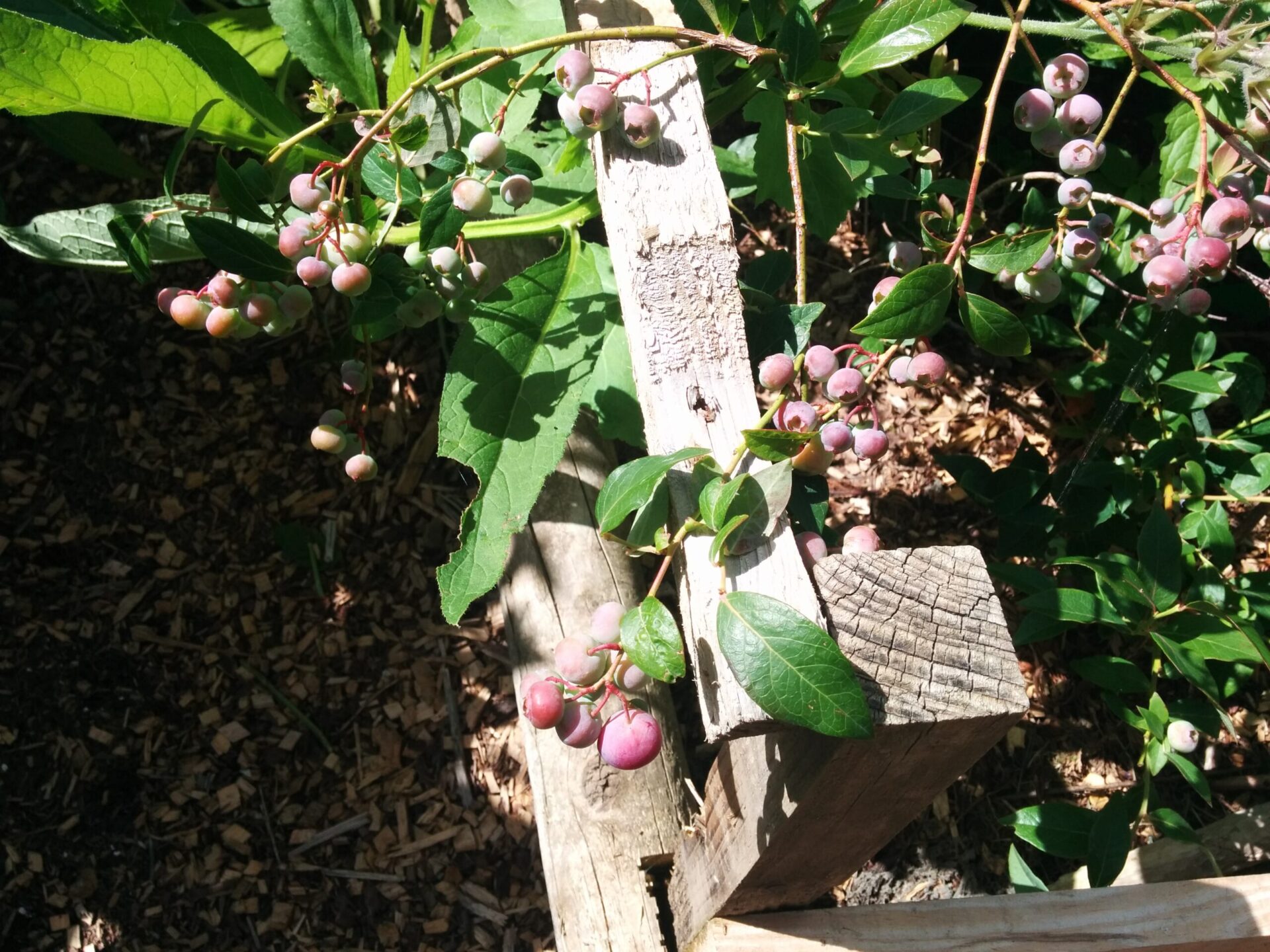
My understanding that the soil is good for blueberries and cranberries is spot on! Both are members of the Vaccinium genus and are classified as ericaceous (acid-loving).
Fruit & Edible Plants
| Plant | Why it Thrives in Acidic Soil |
|---|---|
| Blueberries (Vaccinium corymbosum) | Need a pH of 4.5 to 5.5 to successfully absorb essential iron and magnesium. |
| Cranberries (Vaccinium macrocarpon) | Require highly acidic, moist, and peaty soil conditions. |
| Rhubarb (Rheum rhabarbarum) | Tolerates and often prefers a slightly acidic environment (pH 5.5 to 6.5). |
| Potatoes (Solanum tuberosum) | Planting in acidic soil helps prevent the disease potato scab. |
| Strawberries (Fragaria \times ananassa) | Prefer a slightly acidic soil (pH 5.5 to 6.5). |
Ornamental Plants
Cornwall is world-famous for its magnificent gardens (like the Lost Gardens of Heligan and Trebah) due to its climate and this acidic soil. The stars of the Cornish garden are the following ericaceous shrubs:
- Rhododendrons and Azaleas: These are the most common and spectacular acid-lovers, with their vibrant spring blooms.
- Camellias: They thrive in the high moisture and low pH, producing their flawless, early-season flowers.
- Magnolias: Many types of Magnolia, especially the large, early-flowering varieties, prefer acidic conditions.
- Heathers (Calluna and Erica): They naturally form heathland habitats on acidic, moorland soils.
- Pieris (Lily of the Valley Bush): Known for its cascading flowers and brilliant red new foliage.
- Hydrangeas: If you want blue Hydrangea flowers, acidic soil is essential. It allows the plant to access aluminium compounds which turn the blooms blue; in alkaline soil, the flowers turn pink.
- Japanese Maples (Acer palmatum): Acidic soil enhances the vibrant autumn colours of these trees.
💡 A Note of Caution
While much of Cornwall is acidic, not every garden is the same! For example, if you live near the coast where sea shells or limestone gravel were used in construction, or in a valley where other sediments have settled, you might find pockets of more neutral or even alkaline soil.
The best thing to do before planting a valuable crop like blueberries is to buy a simple pH soil testing kit to confirm the acidity of your specific garden patch.


Leave a Reply